


6-11 May
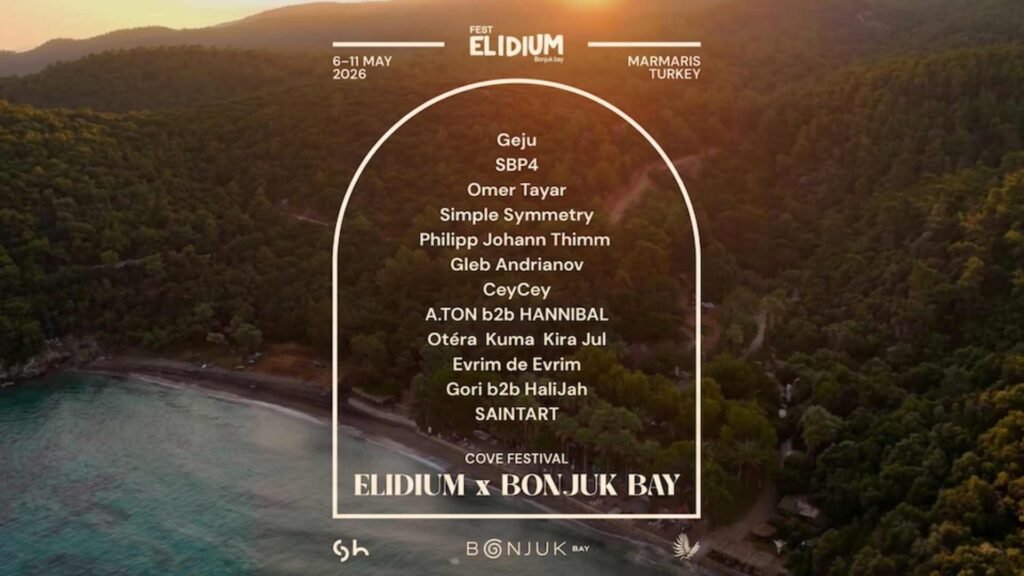
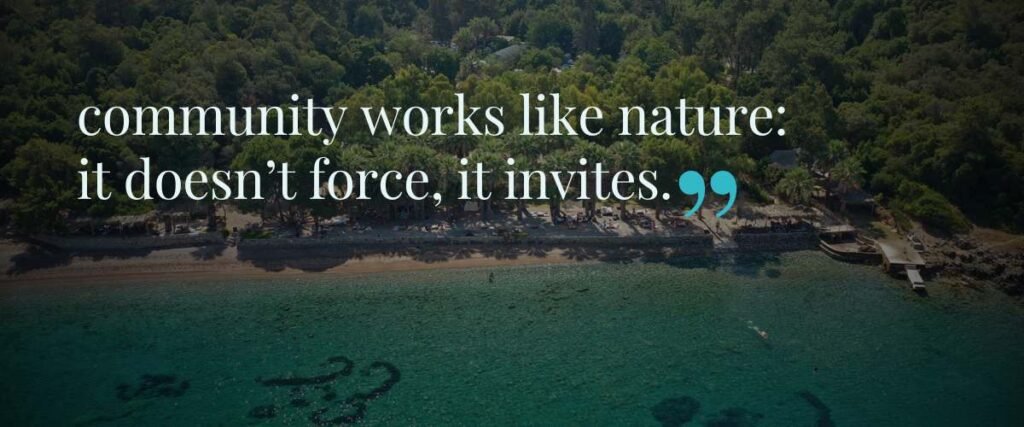
From May 6–11, Bonjuk Bay hosts the Elidium Festival.
We asked the creators about their vision.
- Let’s start from the beginning. How did your community first come together?
Was there a specific moment or need that brought people into this circle?
Most of us have worked with each other before — or are connected through close friends who have. We all come from a similar IT background and met along the way through different companies and projects. There wasn’t one specific moment, it grew naturally from relationships that continued beyond work.
- What values or ideas sit at the center of what you do? If someone encountered your community for the first time, what would they immediately feel?
Human connection is the core value. Relationships are the main long-term asset. We create environments where it’s natural to meet, connect, and start things together.
We focus on creating rather than consuming on value rather than noise across personal, social, and cultural levels. You immediately feel that everything is intentional. Nothing feels random or performative.
- Communities often grow organically. How has yours evolved since it first began?
It started as a group connected through work and gradually expanded.Friends brought friends, more countries got involved, and over time it became less about shared work and more about a shared way of living, thinking, and spending time together.
- What kind of people tend to find their way into your space? Is there a shared curiosity, mindset, or energy that connects them?
Founders, creatives, builders, parents, people living between countries, projects, and identities. Many work remotely, build companies, create art, or grow communities while moving between places. It’s an international mix. Europe, post-Soviet countries, the US, and beyond. What connects them is openness, curiosity, and willingness to engage.
- Every community has its own rhythm. What does a typical gathering or experience with you look like?
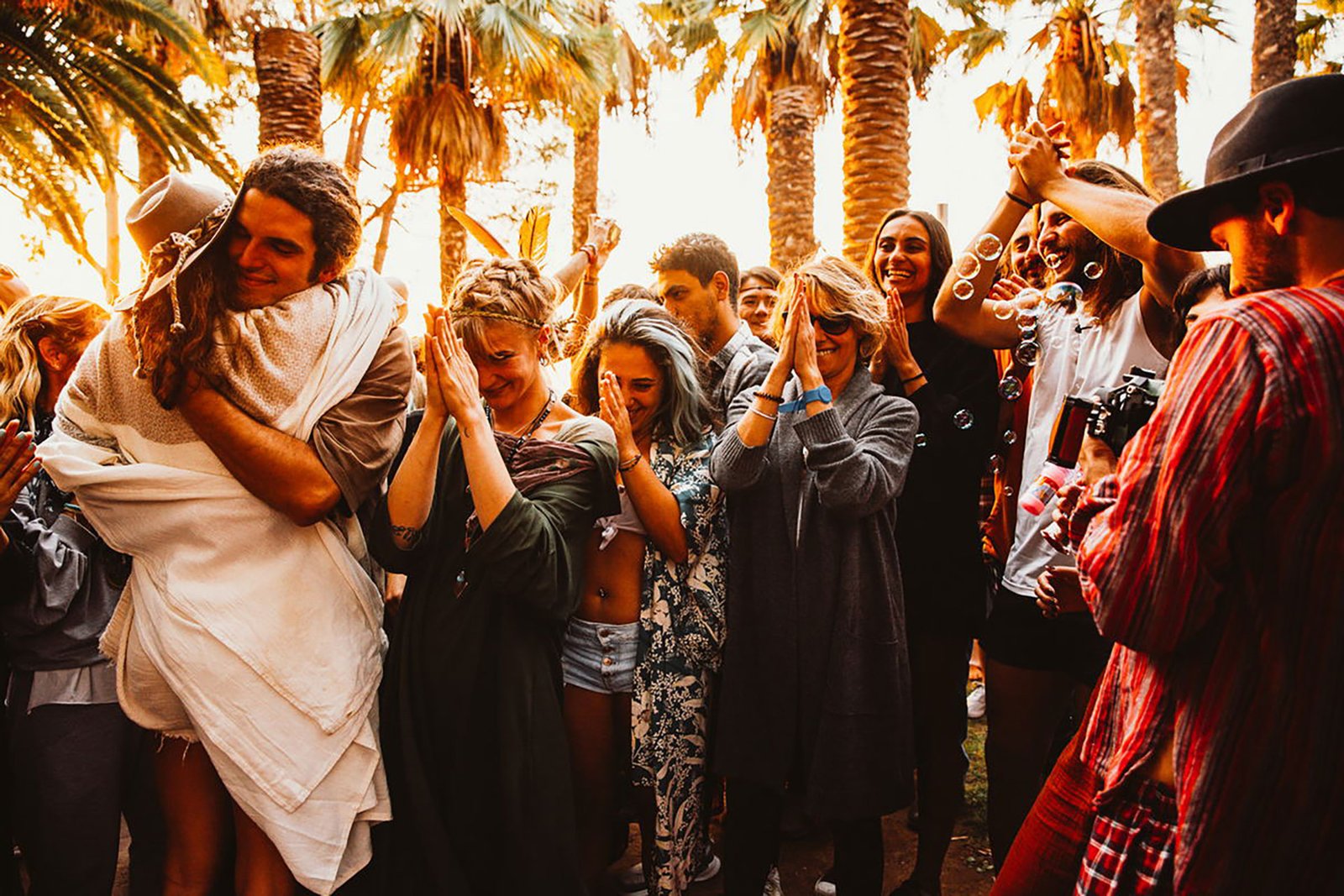
Most often, it’s a cozy mix of things that don’t seem obviously connected: sport, great music, shared cooking, we really care about food, conversations about philosophy and business, and dancing. A lot of dancing. And beautiful outfits.
That’s what our gatherings look like whether it’s a festival in a private bay, a birthday, or just a Friday evening.
- What drew you to collaborate with us at Bonjuk Bay? What felt aligned?
It felt very natural. The scale, the setting, and the intention are very close to how we see gatherings ourselves.
An intimate environment, attention to detail, and focus on real connection rather than mass experience, that’s what resonated.
- For guests who will be experiencing this collaboration for the first time, what can they expect?
It will be fun. Very fun. We’ll dress up, dance, do sports, and laugh a lot. You’ll most likely leave with a few or even a dozen new good friends.
- Is there something unique you’re bringing into this gathering that people might not encounter elsewhere?
A deliberate rejection of typical festival tropes: no multiple stages, no constant rushing, no performative spirituality, no overstimulation for its own sake.
One stage. One flow. And an absolutely perfect, carefully curated music selection.
- What do you hope people leave with after spending time with your community here?
Rest, celebration, laughter, and new ideas things that become harder to access as life fills up with work, distance, and responsibility. Stronger friendships. And a feeling of having been somewhere that felt like home.
Bonjuk Recipes / Roasted Celeriac Salad With Caramelized Onions
Ingredients (Serves 2–3)
1 medium celeriac
1 tbsp olive oil
1 1/2 tsp ground cumin
Salt to taste
Black pepper to taste
1 medium onion
1 tbsp olive oil for the onion
2 spring onions
4 cornichons
5 sun-dried tomatoes
Dressing
1 tbsp Dijon mustard
3 tbsp fresh orange juice
1 tsp honey
1 small garlic clove, grated
1 tsp freshly grated ginger
2 tbsp olive oil
Salt and black pepper to taste
Step 1
Peel the celeriac and cut it into small cubes.
Step 2
Place the celeriac on a baking tray. Toss with olive oil, cumin, salt, and black pepper. Roast in a preheated oven at 200°C (390°F) for 30–35 minutes, until golden and tender.
Step 3
Thinly slice the onion and cook it in olive oil over low heat for 15–20 minutes, stirring occasionally, until soft and caramelized.
Step 4
Combine the roasted celeriac with the caramelized onions.
Step 5
Thinly slice the spring onions, finely chop the cornichons, and slice the sun-dried tomatoes. Add them to the salad.
Step 6
In a small bowl, whisk together the mustard, orange juice, honey, garlic, ginger, olive oil, salt, and black pepper.
Step 7
Pour the dressing over the salad and mix everything together well before serving.
Bon appétit!

Weekly Tunes
Geju is a duo from Moscow, launched by Georgy Topuridze and Denis Kurchenko in 2016. Their refined blend of instrumental samples, psychedelic effects, and floating vocals over a truly distinctive, bouncy beat hypnotizes the crowd and draws them into an ecstatic dance.
By challenging the traditional concept of rave culture in Russia, Geju quickly carved out a sound of their own. International recognition soon followed, establishing them as pioneers and true gurus of the Chillrave movement.
Geju will be joining us at Elidium Festival from May 6–11, bringing their immersive sound and deep, collective energy to the experience.

Whatever We Do, We Do With Love
Some statements are easy to say and difficult to hold.
This statement from our manifesto is one of them.
Love, in most spaces, has been reduced to a tone something soft, welcoming, almost decorative. A word used to smooth things over, to make experiences feel warmer without necessarily changing their substance.
But to do everything with love is not about tone.
It is about intention carried into action.
At its core, love is a form of attention. It is how something is held, how much presence is given to it, how carefully it is shaped. It shows up in the details no one announces the way a space is prepared before anyone arrives, the way transitions are felt rather than forced, the way people are met without needing to explain themselves.
Love, here, is not a peak experience.
It is a baseline.
It asks whether the same care can exist in the quietest action as in the most visible one in setting a table, adjusting a light, answering a question for the tenth time. Not because it is special, but because it is part of the whole.
In this sense, love becomes a form of consistency.
A refusal to treat moments differently based on their importance.
It also changes the way things are built.
When something is done with love, speed is no longer the priority. Neither is excess. What matters is whether it feels right, whether it holds, whether it supports, whether it allows something real to happen inside it.
At Bonjuk, this becomes tangible in small ways. Not as a concept placed on top, but as a thread running through everything. The way spaces open rather than impose. The way nothing feels accidental, even when it appears effortless. A certain continuity between day and night, between people and place, between what is seen and what supports it behind the scenes.
It also shifts the role of the individual within the space.
Love is not something provided by the environment alone. It is something each person participates in. The way you move, the way you respond, the way you hold others these become part of the atmosphere.
So the statement is not only descriptive.
It is an invitation.
Not love as a feeling, but as a practice.
A way of doing things that, over time, shapes how everything is experienced.
Because when something is built with love, you can feel it even if no one tells you it’s there.
The Bird That Sees Everything
Long ago, in a time when the world was still being shaped, the gods created many animals, each with a purpose. Some were strong, some were fast, some could fly higher than the clouds.
But there was one problem.
Nothing in the world could see everything. Each creature saw only a small part of life what was in front of it, what it needed to survive. The gods wanted something that could observe more, something that could notice details others missed.
So they created a plain bird.
It wasn’t very impressive at first. Its feathers were dull, and it didn’t stand out. But it had one special role: it would walk the world and watch.
The bird traveled everywhere. It watched rivers flow, storms form, people argue, people help each other, seasons change. It didn’t interfere, it just paid attention.
After a long time, the gods asked the bird what it had learned.
The bird said, “Everything is always changing. But people don’t always notice. They forget what they’ve seen, and they don’t always understand themselves.”
The gods thought about this. Then they decided to give the bird a new form, something that would help others see more clearly.
They transformed its feathers.
Across its tail, they placed patterns that looked like eyes. Each one represented a moment the bird had witnessed something real, something important. When the bird opened its feathers, it was like showing all those moments at once.
From then on, when people saw the bird now a peacock they would stop for a second. They would look closer. Sometimes they would feel like the bird was looking back at them, even though it wasn’t.
Over time, people started to believe the peacock could see things others couldn’t. Some said it could see truth. Others said it could protect against lies or illusions.
But really, the peacock didn’t do anything magical.
It just reminded people to pay attention.
And that was something the world needed.
It just reminded people to pay attention.

If you have a story, project, or idea you’d like to share, we’d love to hear from you and help spread the word. Feel free to reach out to us at community@bonjukbay.com